
High-impact PCa abstracts centre on TULSA and RoboSling
Spearheaded by Prof. Joost Boormans (NL), Prof. Kari Tikkinen (FI), and Prof. Derya Tilki (DE), the Abstract Session “Late-breaking and high-impact abstracts” featured notable abstracts on prostate cancer, non-muscle-invasive bladder cancer, penile cancer, and kidney transplantation.
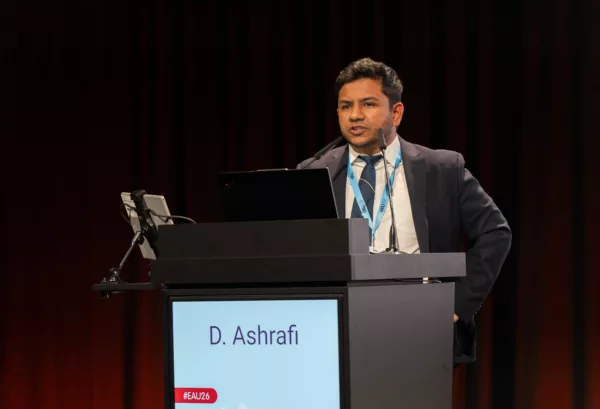
One of the two prostate cancer (PCa) discussions “Prostate Cancer: Optimising radical prostatectomy outcomes and focal therapy” comprised two abstracts: LB005 and LB006.
In his abstract LB005 “Randomised controlled trial evaluating MRI-guided transurethral ultrasound ablation (TULSA) versus robotic prostatectomy: Initial perioperative outcomes”, Dr. Laurence Klotz (CA), discussed the CAPTAIN study, which is the first fully enrolled phase 3 multicentre RCT directly comparing functional and oncologic outcomes of ablation versus prostatectomy. It showed that TULSA is superior on the primary safety endpoint at six months, consistent with the results from the TULSA single-arm pivotal registration study.. On secondary measures of recovery, TULSA is superior as there is no blood loss or overnight stay, reduced post-procedure pain, faster recovery to work and daily activities, improved patient-reported overall health, and fewer complications requiring hospitalisation.
“Stay tuned for the oncological outcome (freedom from additional PCa treatment) of this trial, which will be reported at three years. Follow up will continue for 10 years,” stated Dr. Klotz.
On RoboSling
Dr. Darius Ashrafi (AU) discussed his abstract LB006 “Phase III results of the RoboSling randomised controlled trial - continence outcomes with autologous vascularised bladder neck sling during robotic radical prostatectomy”. According to him, there is no improvement in continence with autologous vascularised sling during robot-assisted radical prostatectomy (RARP) at 3, 6, or 12 months. In addition, there is no difference in International index of erectile function (IIEF), Expanded Prostate Cancer Index Composite (EPIC), or quality of life (QoL). Dr. Ashrafi stated that sexual function and patient-reported outcomes are comparable across all timepoints.
Furthermore, routine use for continence enhancement is not supported, but it is safe. Operative time, estimated blood loss (EBL), complications, and length of stay are comparable.
For the abstract discussions on prostate cancer (screening, diagnosis, and treatment planning), non-muscle-invasive bladder cancer, penile cancer, and kidney transplantation, check out the webcasts via our EAU26 Resource Centre.
Suggested for you
See allThere are no news articles related to this page right now. See all news articles