
Plenary Session navigates controversies in andrology
The EAU Section of Andrological Urology session “Controversial topics in the field of medical and surgical andrology” chaired by Prof. Carlo Bettocchi (IT) commenced today. This article centred on the “Sexual dysfunction” discussions.
Regenerative treatments
In “Regenerative treatments for ED and Peyronie’s – results from monotherapy and combined treatments” Dr. Andrea Cocci (IT) initially explained that erectile dysfunction (ED) and Peyronie’s disease often involved endothelial dysfunction, impaired vascularisation, inflammation, and fibrosis. Conventional therapies are mainly symptomatic, not disease-modifying and that regenerative approaches (extracorporeal shock wave therapy [ESWT], platelet-rich plasma [PRP] injections, and stem cell therapy [SCT]) aim to restore tissue physiology, not only improve symptoms.
According to Dr. Cocci, an increasing number of clinical trials are being registered to evaluate regenerative therapies for erectile dysfunction and Peyronie’s disease. The benefits include a strong safety profile, a minimally invasive approach, and the potential for combination therapy. The limitations include modest and variable efficacy, substantial cost, and unclear long-term outcomes.
On Botox and ED
In his presentation “Botox and Erectile Dysfunction,” President of the Association Française d'Urologie (AFU), Dr. Antoine Faix (FR), stated that current studies remain preliminary and heterogeneous, with limited sample sizes, short follow‑up periods, and frequent use of combination therapies.
He also highlighted ongoing questions regarding variability between toxin subtypes and appropriate dosing (50-500 UI).
Long‑term safety, particularly with repeated administrations, has not been systematically evaluated. Preliminary animal studies in the early post‑radical prostatectomy setting show encouraging results for the preservation of penile structural features.
Further research is needed, specifically large‑scale, multicentre, and methodologically rigorous clinical trials to clarify its therapeutic potential and optimise treatment protocols.
What andrology needs
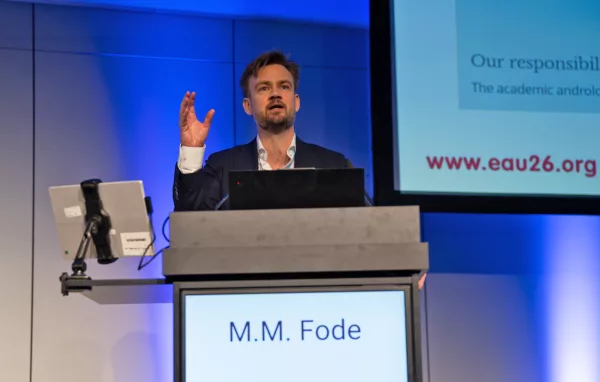
“If we want patients to trust andrology, we must show them that our treatments are driven by evidence, not excitement. Innovations strengthens a field only when it is anchored in evidence”, stated Prof. Mikkel Mejlgaard Fode (DK) during his lecture “Andrology uncovered: What it means now, and where the field is heading?”
What andrology needs now are high-quality multicentre randomised controlled trials, which have to be rigorous, adequately powered trials and not isolated pilot studies. In addition, standardised protocols such as PRP preparation, shockwave parameters, and delivery methods to ensure reproducibility first.
The field also needs long-term follow up (outcomes measured in years, not 3-month snapshots), and integration with systemic health (cardiometabolic risk modification, not isolated symptom treatment).
#UrologyDisruption
“The question is not whether social media will shape men’s health - it will. The question is whether urologists will lead that conversation,” stated Prof. Giorgio Ivan Russo (IT) during his lecture “Andrology in the age of Instagram: How social media is disrupting the field?”.
Why do men turn to anonymous social media instead of doctors? Deep social stigma plays a major role: issues such as infertility and erectile dysfunction often carry shame and embarrassment. This leads to avoidance of care, as men may delay or skip clinical consultations to escape perceived judgment. Social media provides the illusion of privacy, offering an anonymous community without the pressures of face-to-face confrontation. Ironically, the population most in need of expert care is often the most likely to seek unverified advice online.
The consequences of misinformation are serious. Men may experience undue anxiety, facing unnecessary psychological distress about fertility and sexual function based on false claims. Delayed diagnosis is common, as reliance on social media advice can postpone professional medical evaluation. Risky self-treatment is another concern, with unregulated supplements and unproven protocols used without supervision. These behaviours can lead to real harms, including drug interactions, organ damage, and severe hormonal disruption.
Collective responsibility
Medical societies must develop and promote clear social media guidelines. Currently, only 34.6% of residents have ever reviewed such protocols.
Regulatory bodies must enforce stricter standards for health claims, particularly regarding unregulated supplements and unproven treatments promoted by influencers.
Social platforms should implement stronger fact-checking mechanisms and adjust algorithms to prioritise credentialed experts in health-related searches.
In terms of education, digital professionalism should be integrated into medical curricula. Train the next generation to navigate the ethical and practical challenges of online presence.
What can urologists do starting today?
They have to establish presence (be where your patients are - Instagram, Tiktok, and YouTube. Share evidence (post accurate, engaging content that translates science); debunk myths (address misinformation directly and respectfully); Collaborate (amplify credible voices and partner with patient groups); advocate (push for better training and guidelines in your institutions).
Urologists need to establish a presence where patients are such as platforms like Instagram, TikTok, and YouTube. They should share evidence by posting accurate, engaging content that translates science into accessible information, and actively debunk myths by addressing misinformation directly and respectfully. Collaboration is key: amplifying credible voices and partnering with patient groups can broaden impact. Finally, advocacy matters. Urologists should push for better training and updated guidelines within their institutions.